


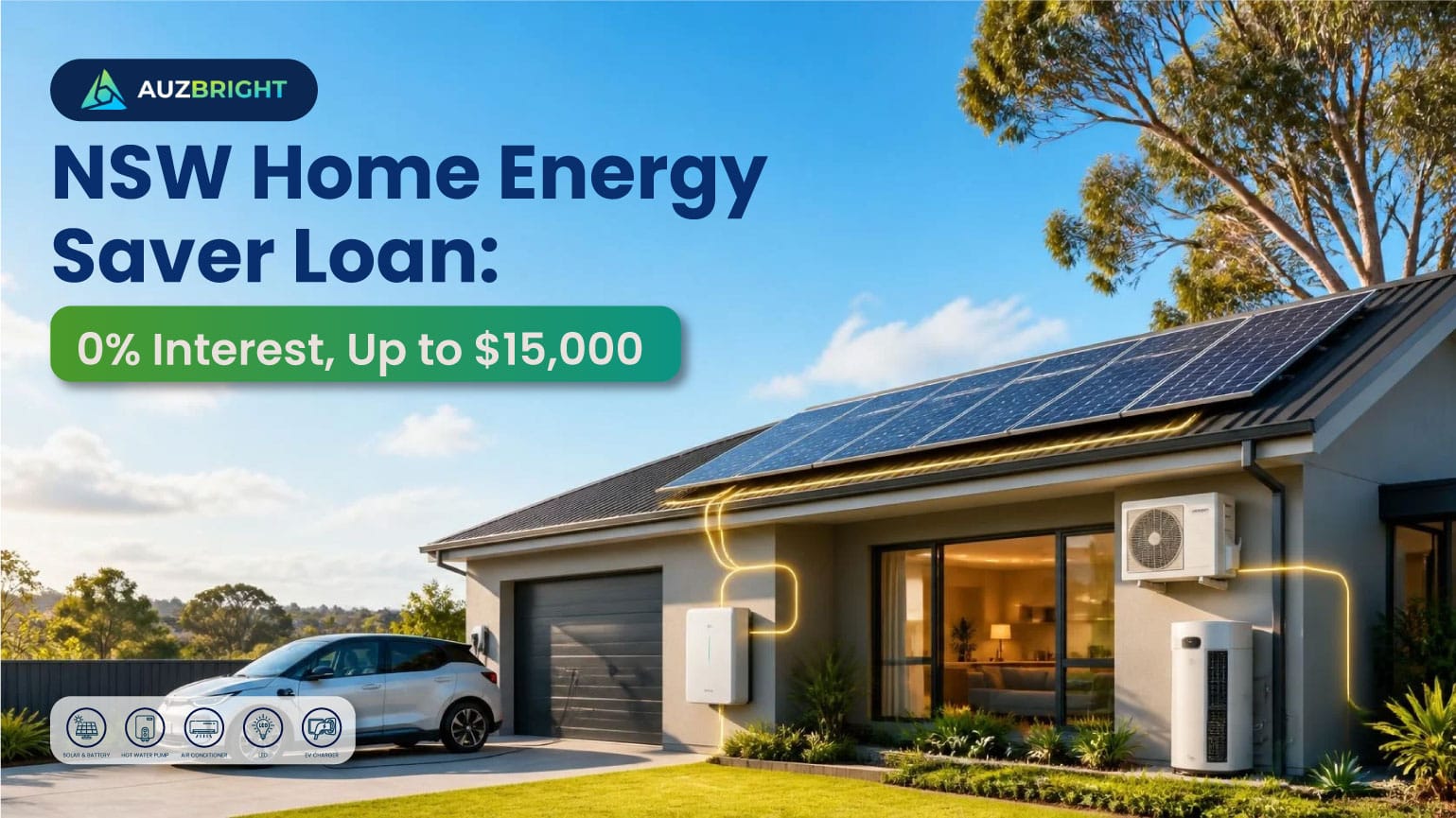
NSW Home Energy Saver Loan: How to Upgrade Your Home at 0% Interest
If your electricity bills keep going up, you’re not alone. Many households are looking for ways to reduce their energy costs, but the upfront expense of installing solar panels, adding a battery, or upgrading an old hot water system can make it difficult to get started.
That’s where the NSW Home Energy Saver loan comes in. This program allows eligible households to borrow up to $15,000 at 0% interest, with repayment terms of up to 10 years. It offers a more manageable way to make energy-efficient upgrades without having to pay the full cost upfront. So, what does the program cover, who can apply, and how do you get started? Let’s take a closer look.
What is the NSW Home Energy Saver loan?
The Home Energy Saver program is a $557 million NSW Government initiative launched on 17 June 2026. It aims to help eligible households improve their home’s energy efficiency, reduce electricity bills, and make energy-saving upgrades more affordable.
The program has two main components: zero-interest loans, which are currently available, and targeted discounts of up to $4,000, which the Government has announced are expected to arrive later in 2026.
Based on published details, here are the key loan terms:
- Borrow between $2,000 and $15,000.
- Pay 0% interest, with a 0% comparison rate.
- Choose a repayment term of up to 10 years.
- Pay no establishment fee or account-keeping fee.
- Make early repayments without additional fees.
- Pay a $4.99 late fee if you miss a repayment, capped at $49.90 per year.
It’s important to remember that this is a loan, not a grant or rebate. You’ll still need to repay the full amount you borrow, but the 0% interest rate can make the cost easier to manage.
For example, borrowing $15,000 over 10 years would work out to approximately $125 per month, assuming equal monthly repayments and no additional charges.
Which upgrades can you finance?
The NSW Home Energy Saver loan covers a range of approved energy-saving upgrades designed to improve your home’s efficiency and help reduce ongoing energy costs.
Current list of eligible upgrades includes:
- Solar systems
- Solar and battery systems
- Battery storage
- EV chargers
- Hot water heat pump systems
- Reverse cycle air conditioning
- Induction cooktops
- Double glazing
You can combine multiple eligible upgrades under one loan, provided the total amount stays within the $15,000 limit. If the project costs more than that, you’ll need to cover the remaining amount yourself.
So, which upgrades are worth considering?
A heat pump hot water system can use significantly less electricity than a traditional electric storage unit. Reverse cycle air conditioning offers an efficient way to heat and cool your home using one system. Meanwhile, solar panels and battery storage can help you use more of the electricity you generate yourself, reducing your reliance on grid power when electricity prices are higher.
Depending on your household’s energy use, combining these upgrades could make a noticeable difference to your electricity bills over time.
Because eligible products and requirements can change, it’s a good idea to check the latest information at energy.nsw.gov.au/home-energy-saver before making a decision.
Who is eligible for the Home Energy Saver loan?
Before arranging an installation or applying for finance, it’s worth checking whether you meet the program’s eligibility requirements.
You may be eligible for the Home Energy Saver loan if:
- Your household’s total taxable income is $210,000 a year or less.
- The property is located in NSW.
- You own the property, either as an owner-occupier or as a landlord.
- You are an Australian citizen or permanent resident.
- You meet the lender’s credit assessment requirements.
- The property is not social housing or short-stay accommodation.
Renters cannot apply for the loan themselves. However, eligible property owners, including landlords, may be able to use it for approved upgrades.
How to apply for the NSW Home Energy Saver loan
Applying for the NSW Home Energy Saver loan is relatively straightforward. With a little preparation, you can get a clearer idea of your upgrade costs, available support, and repayment options before committing to the work.
- Get a quote from an installer :
Start by speaking with an installer who can recommend suitable upgrades for your home. Ask for a detailed quote that outlines the equipment, installation costs, and any other charges. Having a clear quote will help you understand how much you need to borrow and whether the project fits within your budget.
- Check for discounts first :
Before applying for the loan, find out whether you qualify for any available discounts or rebates. These may include support for households earning up to $80,000 or those holding an eligible concession card, subject to the relevant program requirements. If you qualify for a discount, applying for it first could reduce the amount you need to finance. You may then be able to use the Home Energy Saver loan to cover the remaining balance.
- Get your quote :
Once you have your quote and understand your available incentives, you can submit an application. However, the time required for approval may vary depending on your circumstances and the lender’s assessment process. Before proceeding, review the repayment terms and make sure the monthly repayments fit comfortably within your budget.
- Have the upgrade installed :
If your application is approved, you can arrange for the installation to go ahead. Under the process, the lender pays the installer directly after you confirm that the work has been completed. The loan funds are not paid into your personal bank account. This arrangement helps connect the approved finance directly to the energy-saving upgrade you’ve chosen.
Why installer accreditation matters
Choosing the right installer is just as important as choosing the right equipment. Even an efficient solar system or heat pump may not deliver the expected results if it is poorly installed.
Before signing a contract, ask your installer whether they are accredited for the Home Energy Saver loan. It’s also worth checking customer reviews, previous projects, warranty conditions, and the details of the installation quote.
Taking the time to verify these details can help you avoid unexpected costs and make a more confident decision about your home upgrade.
Can you combine it with other incentives?
Yes. In many cases, the NSW Home Energy Saver loan can be used alongside other eligible state and federal incentives, helping you reduce the amount you need to pay upfront.
For example, you may be able to access the federal Cheaper Home Batteries discount first and then use the loan to finance the remaining cost of an eligible battery installation.
Depending on the upgrade and your circumstances, NSW programs such as the Energy Savings Scheme and the Peak Demand Reduction Scheme may also provide additional support.
The important thing is to check which incentives apply to your specific project. Eligibility rules, approved products, and program conditions can vary, so speak with your installer and confirm the latest requirements before making a commitment.
Where possible, factor any confirmed discounts into your budget before deciding how much to borrow.
Is the NSW Home Energy Saver loan worth it?
For many eligible households, the NSW Home Energy Saver loan could be a practical way to make energy-efficient home upgrades more affordable.
The biggest advantage is the 0% interest rate. Instead of paying the entire installation cost upfront, you can spread repayments over time without paying interest under the advertised loan terms. Meanwhile, the energy savings from your new system may help offset some of your monthly repayments.
However, the actual savings will depend on your household’s electricity use, the type of upgrade you choose, installation costs, and how efficiently the system performs.
Before applying, take a few minutes to work through the numbers. Look at your current electricity bills, estimate the potential savings from the upgrade, and compare those savings with the proposed monthly repayment.
For instance, if you’re considering solar panels, think about how much electricity your household uses during the day and how much power you currently purchase from the grid. If you’re replacing an older hot water system, consider its current energy consumption and the likely running costs of the new unit.
It’s also important to leave room in your budget for other household expenses. Although the loan has no interest under the published terms, the borrowed amount must still be repaid in full, and late fees may apply if you miss a repayment.
Final thoughts
The NSW Home Energy Saver loan gives eligible households an opportunity to improve their homes’ energy efficiency without having to cover the full installation cost upfront. With loans of up to $15,000 at 0% interest and repayment terms of up to 10 years, it could make upgrades such as solar panels, battery storage, heat pump hot water systems, and reverse cycle air conditioning more accessible.
The best approach is to check your eligibility, compare quotes from suitable installers, explore any available discounts, and calculate whether the expected energy savings justify the cost.
If the numbers work for your household, the program could be a useful step towards lower electricity bills and a more energy-efficient home.
Before applying, confirm the latest eligibility requirements, eligible upgrades, and loan terms through the NSW Government and your chosen participating lender. This will help ensure you’re working with the most up-to-date information before committing to an upgrade.