


Heat Pump Hot Water with Rooftop Solar in Victoria: How to Plan Daytime Water Heating
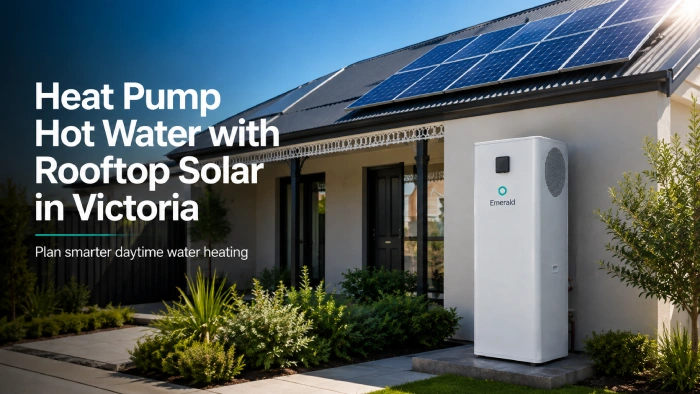
If your Victorian home already has rooftop solar, a heat pump hot water system may give you another way to use electricity generated during the day.
Auzbright supports Victorian households with heat pump hot water and solar solutions. The team can help review whether these systems may be coordinated for your property and daily energy use.
Direct Answer: Can rooftop solar power a heat pump hot water system?
Yes, rooftop solar electricity may help operate a heat pump hot water system during the day when the solar panels are generating power.
Some heat pumps include timers or compatible controls that allow operation to be scheduled during daylight hours. However, solar production changes with weather, season, shading and household electricity use. The heat pump may still use electricity from the grid when solar generation is not sufficient.
The system should therefore be planned around reliable hot water first and solar coordination second.
1. Understand how the two systems work together
Rooftop solar panels generate electricity during daylight hours. A heat pump hot water system uses electricity to transfer heat from the surrounding air into water stored in a tank.
When the heat pump operates while the solar system is producing electricity, some or all of its electricity demand may be supplied by rooftop generation, depending on what else is running in the home.
The hot water tank then stores heated water for later use. In this sense, the household is shifting some water-heating demand into the daytime rather than waiting until evening.
This does not mean the heat pump becomes a solar hot water system. Solar hot water uses roof-mounted collectors to heat water directly, while a heat pump uses electricity to move heat from the air.
2. Review when your solar system produces electricity
Solar production usually rises during the morning, reaches its strongest period around the middle of the day and falls during the afternoon. The exact pattern depends on:
- panel direction and angle
- roof shading
- system size
- weather conditions
- season
- inverter capacity
- panel condition
- household electricity use
Before changing hot water operating times, review the monitoring information from your solar system where available.
The most useful question is not only how much solar the system produces in total. It is whether surplus generation is available when the heat pump is scheduled to operate.
3. Check what else uses electricity during the day
Solar electricity is shared between all appliances operating at the property.
If the dishwasher, washing machine, air conditioning, pool equipment, electric vehicle charger and heat pump all run at the same time, the household may need more electricity than the rooftop system is producing.
Daytime Load | Planning Question |
Heat pump hot water | When should the tank reheat? |
Air conditioning | Is heating or cooling already using midday solar? |
Laundry appliances | Can loads be staggered? |
Dishwasher | Is it running during the same period? |
Electric vehicle | Is charging competing with other appliances? |
Home office equipment | What is the normal weekday demand? |
A practical plan may involve staggering flexible appliances rather than operating every major load simultaneously.
4. Confirm whether the heat pump has suitable controls
Not every heat pump has the same timer, scheduling or smart-control functions.
Before relying on daytime operation, ask:
- Does the proposed model include a timer?
- Can the operating period be adjusted?
- Does it support external control or a solar diverter?
- Can settings be changed by the homeowner?
- Will scheduling affect hot water availability?
- Does the system have a boost mode?
- Are the controls explained during handover?
Product-specific features should be confirmed in the manufacturer documentation and installation quote. Do not assume that every model can be controlled in the same way.
5. Plan around household hot water demand
Solar coordination should not leave the household without enough hot water.
Consider:
- number of occupants
- number of bathrooms
- morning and evening shower times
- laundry and kitchen use
- whether several people shower consecutively
- how quickly the tank needs to recover
- whether demand changes on weekends
- whether the property is rented
A household with high morning demand may need the tank heated before sunrise or may need enough stored water from the previous day. A family with stronger evening demand may benefit from daytime reheating, provided the tank can store sufficient hot water.
The system and schedule should match real household behaviour rather than an idealised solar timetable.
6. Check electricity tariffs and controlled-load arrangements
Some existing electric hot water systems operate on a controlled-load tariff. This arrangement may restrict when electricity is supplied to the system or use a separate meter configuration.
When replacing that system with a heat pump, homeowners should ask how the current tariff and wiring will affect daytime operation.
Questions may include:
- Is the existing system connected to controlled load?
- Will the new heat pump remain on that circuit?
- Can it operate during solar-generation hours?
- Will wiring changes be required?
- Should the retailer or distributor be contacted?
- How will tariff changes affect running costs?
The appropriate arrangement depends on the property, electricity retailer, meter and proposed installation.
7. Allow for cloudy days and seasonal changes
Rooftop solar generation is not constant throughout the year. Victoria typically has shorter daylight hours and lower solar production during winter than during summer.
Cloud cover, shading and weather can also reduce daytime generation. A heat pump should therefore remain capable of producing reliable hot water even when rooftop solar contributes less electricity.
Avoid planning the system on the assumption that solar will cover every operating cycle. The household may still draw electricity from the grid when required.
8. Review system size and installation suitability
aA heat pump should be chosen for household hot water demand and property conditions, not only for solar compatibility.
The assessment should consider:
- storage-tank capacity
- available outdoor space
- airflow
- drainage
- electrical access
- operating sound
- installer access
- distance from bedrooms or neighbours
- replacement of the existing system
A timer cannot compensate for a system that is poorly matched to the household or installed in an unsuitable location.
9. Check current Victorian eligibility separately
Eligible Victorian households may be able to access support for approved heat pump hot water upgrades through current energy-efficiency pathways.
Eligibility may depend on:
- the existing hot water system
- the replacement product
- property age and type
- approved product requirements
- installation conditions
- provider requirements
- current program settings
- supporting documentation
Owning rooftop solar does not automatically confirm VEU eligibility. Solar coordination and upgrade eligibility should be reviewed as separate parts of the decision.
Auzbright can help homeowners understand which information may be required before an eligibility outcome and final quote are confirmed.
10. Ask for a coordinated quote and operating plan
Before proceeding, ask the provider to explain both the installation and how the system may be operated after handover.
The quote or consultation should clarify:
- proposed heat pump model
- storage capacity
- timer or control features
- recommended operating window
- solar-system considerations
- electrical work
- old-system removal
- eligibility assessment
- exclusions and possible additional costs
- homeowner handover and control instructions
This gives the household a clearer plan than simply installing the system and changing operating times later.
Why speak with Auzbright?
Auzbright is based in Derrimut and supports Victorian households with heat pump hot water, rooftop solar, battery storage and other energy-efficiency upgrades.
For homes that already have solar, Auzbright can help review the existing system, household hot water demand, heat pump options, available controls, installation requirements and current eligibility pathways.
The objective is to create a practical setup that maintains reliable hot water while making better use of available daytime solar generation where possible.
Final CTA
If your Victorian home has rooftop solar and you are considering heat pump hot water, contact Auzbright for a property-specific discussion.
Auzbright can help review your solar setup, household hot water use, heat pump controls, installation requirements and current upgrade options before you proceed.
FAQs
Can a heat pump hot water system run directly from rooftop solar?
It can use electricity generated by rooftop solar when both systems are operating at the same time. It may still draw electricity from the grid if solar generation is insufficient.
What is the best time to run a heat pump with solar?
The suitable time usually aligns with stronger daytime solar generation, but it depends on the solar-production pattern, other household loads, hot water demand and available system controls.
Do all heat pumps include a timer?
No. Timer and scheduling functions vary between models. The proposed product’s controls should be confirmed before installation.
Will daytime operation guarantee lower electricity bills?
No. Outcomes vary according to solar generation, electricity tariffs, household usage, system efficiency, weather and how other appliances are operated.
Can Victorian households access support for heat pump hot water?
Some eligible Victorian households may be able to access support for approved upgrades. Current eligibility, product and installation requirements should be confirmed before proceeding.