


Energy Upgrade Budget Planning: How to Prioritise Price, Eligibility and Long-Term Use
Energy upgrade pricing can look simple at first. A heat pump water heater may start from $700, a split-type air conditioner from $1800, ducted air conditioning from $4400, solar from $1800, and battery storage from $5200. But when you are planning a real upgrade budget, the starting price is only one part of the decision.
If your energy bills are increasing, Auzbright can help you identify practical upgrade options for hot water, air conditioning, solar, batteries, and other energy-saving solutions.
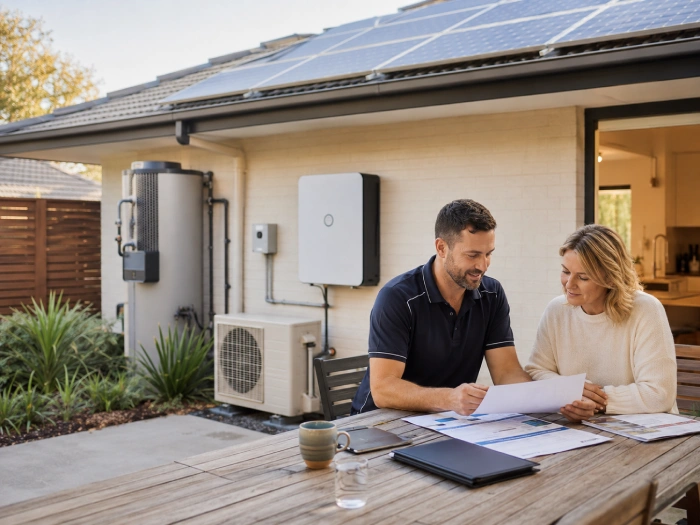
Direct Answer: How should homeowners and businesses plan an energy upgrade budget?
To plan an energy upgrade budget, start by identifying the system causing the biggest issue, then check eligibility, property suitability, product options, installation requirements and long-term usage. Starting prices can help you compare upgrade categories, but the final decision should be based on the actual quote, not only the lowest advertised price.
1. Start with the problem, not the price
The first question should not be “Which upgrade is cheapest?” It should be “Which system needs attention first?”
A property with an old hot water system may need a different priority from a home with poor cooling, a business with high daytime energy use, or a solar household considering battery storage.
Ask yourself:
Is the hot water system old or unreliable?
Is heating or cooling the main comfort issue?
Is electricity use high during the day?
Do you already have solar?
Are you using more energy at night?
Is the upgrade urgent or part of long-term planning?
Is the property residential, rental, commercial or mixed-use?
Auzbright can help households and businesses review these questions before choosing where the budget should go first.
2. Use starting prices as a guide, not a final quote
Starting prices are helpful because they give you an entry point for planning. But they should not be treated as guaranteed final prices for every property.
Upgrade Type | Reference Starting Price | What to Check Before Budgeting |
Heat pump water heater | Starting from $700 | Current system, household demand, eligibility and installation location |
Split-type air conditioner | Starting from $1000 | Room size, product choice, electrical setup and eligibility |
Ducted air conditioning | Starting from $3800 | Vents, zones, roof access, home layout and installation scope |
Solar | Starting from $1800 | Roof suitability, system size, shading and electricity usage |
Battery storage | Starting from $4900 | Solar compatibility, battery size, backup needs and installation requirements |
These prices should be read as subject to eligibility, property suitability, product selection, installation requirements and current program conditions.
3. Check eligibility before committing your budget
Eligibility can affect your final out-of-pocket cost, especially when energy-saving programs, rebates or discounts are involved.
The important point is that eligibility is not the same everywhere. Victorian properties may need to check Victorian Energy Upgrades requirements where relevant. NSW properties may need to check NSW energy-saving pathways, including the Energy Savings Scheme where applicable. Other states may have different rules or different availability.
Avoid assuming that one advertised price applies to every home or business. Eligibility can depend on:
property location
current system
product approval
installation conditions
paperwork
current program rules
residential or commercial property type
landlord, tenant or business approvals where relevant
Auzbright can help you check eligibility before you rely on a starting price.
4. Prioritise urgent systems first
If a system is close to failure, it should usually move higher in the budget plan. Hot water is a good example. If your old electric or gas hot water system is leaking, unreliable or no longer meeting demand, waiting too long can lead to a rushed replacement.
A heat pump hot water upgrade may be worth reviewing if your current system is old or expensive to run. But the quote should still check property suitability, household demand, installation space and eligibility.
For rental properties and businesses, urgency can be even more important because hot water issues may affect tenants, customers, staff or operations.
5. Prioritise comfort if heating and cooling are the issue
If the biggest problem is poor comfort, air conditioning may deserve priority. An older unit may struggle to heat or cool properly, or the property may need comfort in more than one room.
A split-type air conditioner may suit a targeted room upgrade, while a multi-head split system may suit multiple rooms from one outdoor unit. Ducted air conditioning may suit whole-home comfort, but it usually needs more planning around vents, zones and roof access.
When budgeting for air conditioning, check:
- which rooms need heating and cooling
- whether the system is single-room, multi-head or ducted
- whether the home has suitable installation access
- whether electrical work is needed
- whether eligibility may apply
- what is included in the quote
The best budget choice is the system that fits the home and usage, not only the lowest starting price.
6. Prioritise solar if daytime electricity use is high
Solar may move higher on the list if your property uses a lot of electricity during the day. This may apply to work-from-home households, families with daytime appliance use, or businesses that operate during daylight hours.
Before budgeting for solar, check roof suitability, shading, switchboard condition, electricity usage and future energy plans. A small system may not suit a high-use property, while a larger system should be planned around roof space and usage.
Auzbright can help homeowners and businesses review whether solar should come before or after other upgrades such as hot water or air conditioning.
7. Consider battery storage after reviewing solar use
Battery storage should usually be planned around solar use and evening electricity demand. A battery may help store some solar energy for later use, but it does not automatically suit every home.
Before budgeting for a battery, ask:
- Do I already have solar?
- Am I exporting excess solar energy?
- Do I use more electricity in the evening?
- Is my inverter battery-compatible?
- Do I expect backup power?
- Is backup included in the quote?
- Is my property suitable for battery installation?
Battery storage can be useful, but savings and backup performance vary depending on system design, usage, tariffs and household behaviour.
8. Think about long-term use, not only upfront cost
A good budget should consider how the property will be used over the next few years. A family planning more electric appliances may need a different energy plan from a household with low usage. A business planning growth may need to consider hot water, cooling or solar capacity more carefully.
Long-term planning may include:
- future household size
- home office use
- rental property maintenance
- business operating hours
- electric appliance upgrades
- solar and battery planning
- comfort expectations
- system maintenance and support
Auzbright supports energy-efficient upgrade options including heat pump hot water, air conditioning, solar and batteries, so the budget discussion can consider the bigger picture.
Final CTA
If you are planning an energy upgrade budget, speak with Auzbright before choosing based only on price. Auzbright can help you compare starting prices, check eligibility, review property suitability and prioritise upgrades based on your current system, installation requirements and long-term use.
FAQs
How should I decide which energy upgrade comes first?
Start with the system causing the biggest issue. If hot water is unreliable, review hot water first. If comfort is poor, review heating and cooling. If daytime electricity use is high, solar may be worth considering.
Are starting prices the final energy upgrade prices?
Not always. Starting prices are entry points. Final quotes can change based on eligibility, property suitability, product selection, installation requirements and current program conditions.
Can eligibility change my energy upgrade budget?
Yes. Eligibility may affect whether rebates, discounts or support apply. Requirements can vary by state, property, product and current program rules.
Should I choose the cheapest energy upgrade first?
Not always. The cheapest upgrade may not solve the biggest problem. A better approach is to prioritise urgent systems, high-use appliances, eligibility and long-term suitability.
Can Auzbright help plan multiple energy upgrades?
Yes. Auzbright can help households and businesses review heat pump hot water, air conditioning, solar, battery and eligibility options before deciding which upgrade should come first.