


Battery Storage Starting Price: What Homeowners Should Check Before Adding a Battery
Battery storage starting from $5200 can sound like an attractive next step if you already have solar panels or are planning to install solar soon. A battery can help store some of the energy generated during the day so it can be used later, depending on your system design and household usage.
But before adding a battery, homeowners should look beyond the starting price. Battery storage needs to suit your solar system, design and household usage.
But before adding a battery, homeowners should look beyond the starting price. Battery electricity usage, evening demand, backup expectations, installation conditions, product selection, eligibility and long-term goals.
If you are planning solar or battery upgrades, Auzbright can help you compare options and understand how they may fit your home or business energy needs.
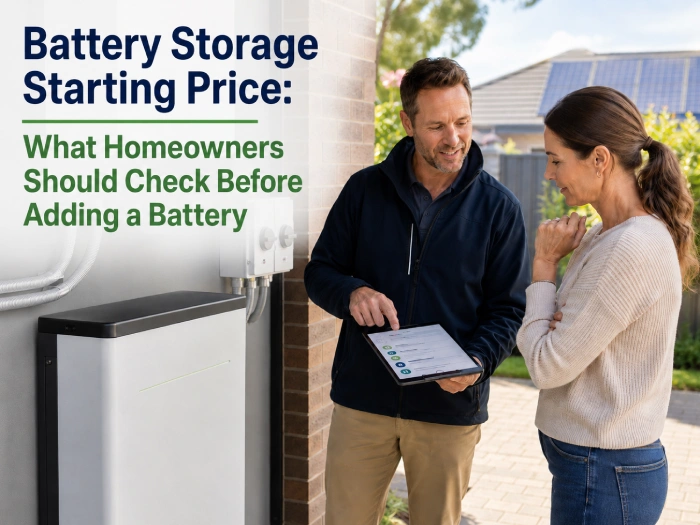
Direct Answer: What should homeowners check before adding a battery?
Before adding a battery, homeowners should check their current solar setup, daily electricity usage, evening demand, roof and inverter suitability, backup expectations, installation space, quote inclusions, eligibility and whether the starting price applies to their property. A battery storage price starting from $5200 should be treated as a starting point, not a guaranteed final price for every home.
1. Understand what “battery storage starting from $5200” means
A starting price is an entry point. It may apply to selected battery options, suitable properties and standard installation conditions. The final quote can change after checking your solar system, property, product selection, installation requirements and current program conditions.
Battery storage starting from $5200 should always be read as subject to eligibility, property suitability, product selection, installation requirements, solar compatibility and current program conditions.
The final price may depend on:
- battery size and product type
- whether you already have solar
- inverter compatibility
- switchboard condition
- installation location
- backup power requirements
- wiring and electrical work
- eligibility for any available support
- monitoring and system setup
This is why a proper quote is more useful than relying only on a starting price.
2. Do you already have solar panels?
Battery storage is usually most useful when it is connected to a solar setup. If you already have rooftop solar, a battery may help store excess solar energy generated during the day for later use.
Before requesting a battery quote, check:
- How large is your existing solar system?
- How much solar energy do you export during the day?
- Is your inverter battery-compatible?
- Is your system old or recently installed?
- Do you have monitoring data?
- Are you planning to increase energy use in the future?
If you do not already have solar, Auzbright can help you review whether solar and battery together may be a better planning option than adding one without the other.
3. When do you use the most electricity?
Battery value often depends on when your household uses electricity. If your home uses most of its power during the day, solar alone may already cover part of your usage. If your home uses more electricity in the evening, a battery may be worth reviewing because it can store energy for later use.
Consider your daily pattern:
Household Pattern
Battery Question to Ask
High daytime usage
Do I need a battery now, or is solar enough first?
High evening usage
Can stored solar energy support evening demand?
Work-from-home household
How much power is already used during sunlight hours?
Family with evening appliance use
Would battery storage align with evening routines?
Existing solar exporter
Am I exporting energy that could be stored?
Auzbright can help homeowners think through usage patterns before choosing a battery option.
4. Do you expect backup power?
Many homeowners assume every battery automatically provides backup during a power outage. This is not always true. Backup capability depends on the battery, inverter, wiring, switchboard setup and system design.
Before adding a battery, ask:
- Does this battery offer backup power?
- Is backup included in the quote?
- Does it support the whole home or selected circuits?
- What appliances can run during an outage?
- Is extra equipment needed?
- How long could backup last under normal conditions?
- Will the battery reserve power for backup?
This is important because a battery selected for energy storage may not automatically meet backup-power expectations.
5. Is your property suitable for battery installation?
Battery storage needs a safe and practical installation location. The right place can depend on product requirements, ventilation, weather protection, wall strength, access, electrical layout and local installation standards.
A property suitability check may review:
- indoor or outdoor installation options
- wall or floor mounting
- distance from switchboard or inverter
- weather exposure
- access for installers and future servicing
- fire safety and clearance requirements
- garage, external wall or utility area suitability
Auzbright can help review whether your property has a practical location before you move ahead.
6. What does the quote include?
Battery quotes can vary widely. A lower starting price may not include the same battery size, backup setup, monitoring, electrical work or installation scope as another quote.
Before booking, ask whether the quote includes:
- battery supply
- installation
- inverter or hybrid inverter requirements
- switchboard work if needed
- backup power setup if required
- monitoring setup
- compliance paperwork
- eligibility assessment
- any exclusions or extra site costs
- product and installation support details
The clearer the quote, the easier it is to compare options properly.
7. Are rebates or discounts available?
Some homeowners may be able to access support for eligible battery storage, depending on current federal, state or territory programs. Eligibility may depend on property location, product requirements, installer requirements, existing solar, battery size, paperwork and current program rules.
Do not assume that every property qualifies for the same support. Avoid claims such as “everyone gets a rebate”, “guaranteed discount” or “battery backup for every home”. Auzbright can help check whether any available support may apply to your situation before you rely on the starting price.
8. How does a battery fit with future upgrades?
Battery storage should be planned with your broader home energy use in mind. If you are also considering heat pump hot water, air conditioning upgrades, electric appliances or an electric vehicle, your electricity demand may change.
For example, a household planning to use more electricity in the evening may approach battery storage differently from a household with high daytime usage. A home with efficient appliances may also need a different battery discussion from a home with older high-use systems.
Auzbright supports energy-efficient upgrade options including solar, batteries, heat pump hot water and air conditioning, so the recommendation can consider the bigger picture.
Final CTA
If you are considering battery storage starting from $5200, request a quote from Auzbright before making a decision. Auzbright can help you check solar compatibility, battery suitability, eligibility, backup expectations and installation requirements based on your property and energy use.
FAQs
Is battery storage really available starting from $5200?
Auzbright may offer battery storage options starting from $5200, subject to eligibility, property suitability, product selection, solar compatibility, installation requirements and current program conditions. A quote is needed before confirming the final price.
Do I need solar panels before adding a battery?
In most cases, a battery is most useful when connected to a solar system. Some homeowners may add a battery to existing solar, while others may plan solar and battery together.
Will a battery provide backup power during a blackout?
Only if the battery system is designed and configured for backup. Some systems may support selected circuits, while others may need extra equipment or may not provide backup.
Can battery storage reduce electricity bills?
Battery storage may help reduce grid electricity use, but savings vary. Solar generation, usage patterns, tariffs, battery size, system design and household behavior all affect outcomes.
What should I ask before accepting a battery storage quote?
Ask what is included, whether your solar system is compatible, whether backup is included, what eligibility applies, where the battery will be installed and whether extra electrical work is required.