


Replacing Electric Storage Hot Water with a Heat Pump in Western Melbourne: Controlled Load, Wiring and Timing Questions
Older electric storage hot water systems are common in established homes, and some operate on off-peak or controlled-load electricity arrangements. When the system reaches the end of its life, replacing it with a heat pump can be worth considering — but the change is not always a simple one-for-one swap.
The existing circuit, tariff, switchboard, operating times and household hot-water habits should all be reviewed before the new system is selected.
Auzbright is based in Derrimut and supports western Melbourne households considering heat pump hot water upgrades. If you currently have an electric storage system, the first step should be identifying how that system is powered and when it is allowed to heat water.
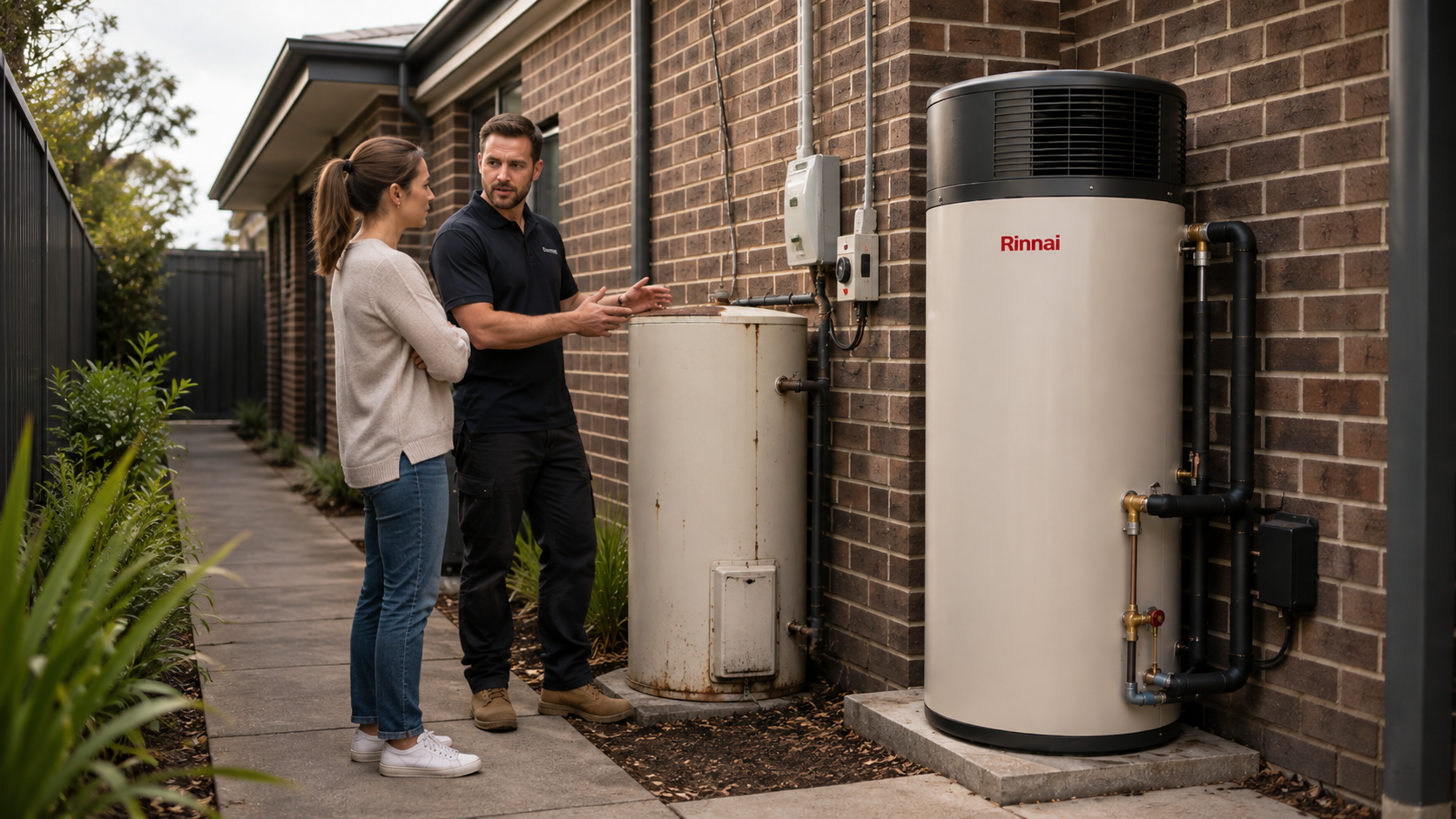
Direct Answer: Can an electric storage hot water system be replaced with a heat pump?
Yes. An existing electric storage hot water system can often be replaced with a heat pump hot water system, subject to property suitability, electrical requirements, product selection and current eligibility conditions.
The key questions are whether the existing system is on a controlled-load circuit, what electrical changes may be needed, when the new heat pump should operate and whether the selected system can meet the household’s daily hot-water demand.
1. Identify how the existing electric hot water system is connected
Before choosing the replacement, confirm how the old system receives electricity.
Some electric storage systems operate on a standard household electricity circuit. Others use a controlled-load arrangement, sometimes referred to as off-peak hot water.
A controlled-load tariff normally applies to a specific appliance and may only supply electricity during certain periods, commonly outside peak-demand times.
Ask:
- Is the current hot water system on a controlled-load tariff?
- Does it have a separate circuit?
- Does the electricity bill show a separate controlled-load charge?
- Is the heating period restricted?
- Is there a timer or network-controlled arrangement?
- Has the meter or tariff changed since the system was installed?
This information helps the installer and electrician understand what may need to change.
2. Do not assume the heat pump should use the same controlled-load setup
The old electric storage system may have been designed to heat a large tank during an overnight off-peak period.
A heat pump operates differently. It uses electricity to transfer heat from the surrounding air into stored water and may have different operating and control requirements.
Some heat pumps include programmable timers, allowing homeowners to choose when the system reheats. Victorian guidance notes that many heat pumps offer timer functions that can be used around off-peak electricity periods or rooftop-solar generation.
That does not mean every existing controlled-load connection should automatically be removed or retained.
The right arrangement depends on:
- the heat pump model
- the existing wiring
- the electricity tariff
- household demand
- whether rooftop solar is installed
- how often the tank needs to recover
- the property’s electrical setup
3. Check whether electrical work is required
Replacing an electric storage system with a heat pump may involve changes to the electrical connection.
The scope should be assessed by the appropriately licensed electrical professional.
Items that may need review include:
- the dedicated hot-water circuit
- switchboard condition
- circuit protection
- wiring
- isolation requirements
- timer or control arrangements
- meter configuration
- connection to a controlled-load circuit
- whether the new system needs a different supply arrangement
Not every property will require substantial electrical work.
The important point is to identify any changes before accepting the final installation price.
4. Think about when you actually want the heat pump to run
Operating time can affect both convenience and electricity cost.
There are several possible considerations.
If the home has rooftop solar
Some households may prefer the heat pump to operate during stronger daytime solar production so more of the electricity generated on site can be used within the home.
Australian Government guidance notes that changing an electric hot-water system from controlled-load operation toward solar self-consumption requires an accredited electrician.
If the household uses time-of-use electricity pricing
A homeowner may instead consider operating the system during lower-price periods.
If the household has high hot-water demand
Reliability should come first.
Restricting the system to a very narrow operating window may not suit every household, particularly where several people shower consecutively or use large amounts of hot water.
5. Check the household’s real hot-water demand
Do not select the heat pump only because it physically fits where the old tank was installed.
Consider:
- number of occupants
- number of bathrooms
- shower habits
- morning versus evening demand
- baths
- laundry use
- kitchen hot-water use
- whether several people shower one after another
- future changes in household size
The storage capacity and recovery performance should suit the household.
Current Victorian guidance also recommends considering existing tank size and actual household hot-water use when choosing a replacement.
6. Review the installation location
The existing electric storage location may or may not be suitable for a heat pump.
A heat pump needs appropriate installation conditions, including suitable airflow and servicing access.
The assessment may also consider:
- outdoor or suitable installation space
- drainage
- plumbing connections
- electrical access
- distance from bedrooms
- proximity to neighbouring properties
- access for future servicing
- hot-water pipe runs
A property assessment is more useful than assuming the new equipment will simply occupy the same footprint as the old tank.
7. Clarify what happens to the old system
The quote should explain what is included in the replacement.
Ask whether it covers:
- disconnecting the old electric storage unit
- removal and disposal
- plumbing changes
- electrical work
- drainage
- new valves or fittings where required
- commissioning
- compliance paperwork
- any additional site-specific work
Two quotes can look similar in price while including very different scopes.
8. Check current Victorian upgrade eligibility
At the time of writing, Victorian Energy Upgrades continues to include approved efficient hot-water upgrades. Current Victorian guidance states that qualifying households replacing an existing hot-water system must meet applicable property and product requirements, including installation of an approved product under the program.
Eligibility should still be confirmed before proceeding because program conditions and approved-product requirements can change.
Do not assume:
- every electric storage system qualifies
- every heat pump is approved
- every property receives the same discount
- approval is automatic
- additional electrical work is included in an advertised offer
Auzbright can help western Melbourne homeowners understand the information required for a current eligibility assessment.
9. Ask for the operating plan as well as the installation quote
Before accepting the proposal, ask how the system is expected to operate after installation.
A useful handover should explain:
- normal heating schedule
- timer settings where applicable
- boost functions where applicable
- what happens after high hot-water use
- how controlled-load or tariff arrangements have been handled
- what settings the homeowner can change
- who to contact if the system does not operate as expected
This is especially important when replacing an older system that previously operated automatically overnight.
Why speak with Auzbright?
Auzbright is based in Derrimut and supports households across western Melbourne considering heat pump hot water upgrades.
For an electric storage replacement, Auzbright can help review:
- the existing system
- property suitability
- controlled-load considerations
- household hot-water demand
- installation requirements
- product options
- current eligibility pathways
- quote inclusions
The aim is to understand the existing setup first, then plan the replacement around the property and household.
Final CTA
If your western Melbourne home still uses electric storage hot water, contact Auzbright before choosing a replacement.
The team can help you review the current system, controlled-load arrangement, installation requirements and heat pump options so you can make a more informed upgrade decision.
FAQs
Can a heat pump use the same controlled-load circuit as my old electric hot water system?
Possibly, but it should not be assumed. The system, wiring, tariff and operating requirements need to be reviewed by the relevant qualified professional.
What is controlled-load hot water?
A controlled load is a separate electricity tariff or circuit commonly used for appliances such as electric hot water. Electricity is supplied or charged under specific conditions or operating periods.
Should a heat pump run during the day instead of overnight?
It may make sense where the home has rooftop solar or suitable electricity pricing, but the best operating schedule depends on the system, household demand and tariff.
Will I need a switchboard upgrade?
Not necessarily. The existing electrical setup should be assessed before installation to determine whether any changes are required.
Can electric storage hot water replacement qualify for VEU support?
Some eligible Victorian properties may be able to access support for approved heat-pump hot-water upgrades. Current requirements and approved products should be confirmed before proceeding.