


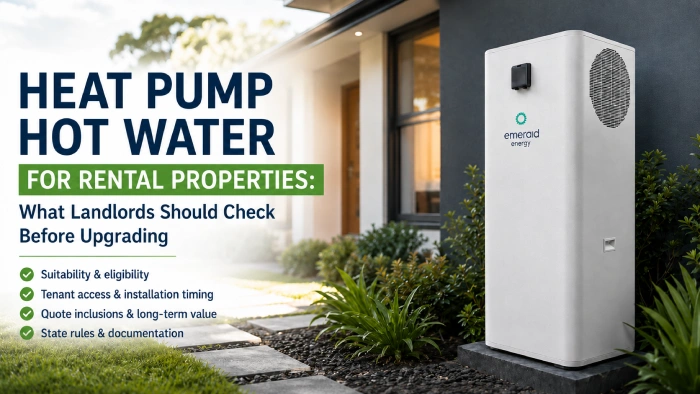
Heat Pump Hot Water for Rental Properties: What Landlords Should Check Before Upgrading
For landlords and property investors, hot water is not just another appliance decision. A reliable hot water system supports tenant comfort, property liveability, long-term maintenance planning and rental property management.
If an older electric or gas hot water system is becoming unreliable, expensive to operate, or close to the end of its life, a heat pump hot water system may be worth reviewing. But rental properties need extra planning. Landlords may need to consider property suitability, tenant access, agency communication, installation timing, state-based eligibility and long-term maintenance.
If your rental property has an ageing hot water system, Auzbright can help you check eligibility and explore heat pump hot water upgrade options before you approve the next step.
Direct Answer: What should landlords check before upgrading?
Before upgrading a rental property to heat pump hot water, landlords should check the current hot water system, property suitability, household demand, installation location, tenant access, landlord or agent approvals, state-based eligibility, quote inclusions and long-term maintenance requirements. Eligibility and final costs can vary, so landlords should request a proper assessment before booking.
1. Start with the current hot water system
The first step is understanding what is already installed at the rental property. A heat pump upgrade may be more straightforward for some properties and more involved for others.
Landlords should check:
- Is the current system electric, gas or solar boosted?
- Is it storage or instantaneous?
- How old is the system?
- Has the tenant reported reliability issues?
- Is the system leaking, noisy or slow to recover?
- Has it required recent repairs?
- Is it located indoors, outdoors, in a garage or in a tight space?
If the current system is already showing signs of failure, it may be better to review upgrade options before the landlord is forced into an urgent replacement.
2. Review property suitability
A heat pump hot water system needs suitable installation conditions. Rental properties can vary widely, from detached houses and townhouses to apartments, units and strata-managed properties.
Property suitability may depend on:
Factor | Why It Matters |
Available space | The system needs a practical installation location. |
Airflow | Heat pumps need suitable surrounding air conditions. |
Drainage | Plumbing and condensate drainage may need review. |
Access | Installers need safe access to complete the work. |
Noise location | Placement should consider tenants and neighbouring properties. |
Electrical setup | Some properties may need electrical checks before installation. |
Auzbright can help landlords review whether a heat pump hot water system may suit the rental property before a quote is finalised.
3. Consider tenant needs and household demand
Rental properties are used by real households, so the hot water system should match the occupants’ likely demand. A one-bedroom unit may not need the same setup as a family rental with multiple bathrooms.
Landlords should consider:
- How many people live at the property?
- How many bathrooms are used?
- Is the property marketed to families, couples, students or shared households?
- Does the current system keep up with daily use?
- Could future tenants have higher hot water demand?
- Is the system suitable for normal rental use?
A heat pump hot water upgrade should support practical tenant needs, not only meet the lowest possible quote.
4. Plan tenant access and installation timing
Rental property upgrades need coordination. Even if the landlord approves the work, the tenant or property manager may need to help arrange access. Poor timing can cause frustration, especially if hot water is already unreliable.
Before booking, ask:
- Who will coordinate with the tenant?
- How much notice is needed?
- How long may the installation take?
- Will hot water be unavailable during the work?
- Is the tenant available for access?
- Does the property manager need to approve scheduling?
- Are there strata or body corporate access rules?
A clear process helps reduce disruption and makes the upgrade smoother for the landlord, tenant and installer.
5. Check Victoria and NSW eligibility separately
Eligibility should always be checked based on the property location. Rental properties in Victoria and NSW should not be treated under the same rules.
For Victorian rental properties, landlords may need to check Victorian Energy Upgrades requirements where relevant. For NSW rental properties, landlords may need to check NSW energy-saving pathways where applicable. Other Australian states may have different rules, different availability or different requirements.
Do not assume every rental property qualifies. Eligibility can depend on the current system, property type, product selection, installation conditions, documentation and current program rules.
Auzbright can help landlords check which pathway may apply before they rely on rebate or discount claims.
6. Understand ownership, approval and paperwork
Landlords should make sure the right person approves the upgrade. In some cases, a property manager may coordinate quotes, but the property owner may still need to approve cost, product choice and installation.
For apartments, townhouses or strata properties, additional approvals may be required for external units, noise considerations, common property access or installation locations.
Before approving the work, clarify:
- Who owns the property?
- Who can approve the upgrade?
- Is the property managed by an agent?
- Is the property under strata or body corporate rules?
- Is tenant access required?
- What documents or certificates will be provided?
- Is eligibility paperwork needed?
This helps avoid delays after the quote has been accepted.
7. Compare the full quote, not only the headline offer
Landlords often compare upgrades by price, but a rental property quote should be reviewed carefully. A cheaper offer may not include the same scope, installation work or site requirements.
Ask whether the quote includes:
- supply of the heat pump hot water system
- standard installation
- removal or disconnection of the old system if required
- plumbing work
- electrical work
- drainage requirements
- tenant access coordination
- certificates or compliance paperwork
- eligibility assessment
- exclusions or possible extra costs
The quote should be clear enough for the landlord to understand what is included before approving the upgrade.
8. Think about long-term rental property value
A heat pump hot water system may support a more energy-efficient rental property, but landlords should avoid making fixed savings claims to tenants unless those claims are verified and specific to the property.
Savings can vary based on household usage, tariff, system type, installation, weather and tenant behaviour. A more practical way to think about the upgrade is to ask whether the system is suitable, efficient, reliable and aligned with long-term property maintenance plans.
Auzbright supports Australian households and businesses with energy-efficient upgrade options, including heat pump hot water, air conditioning, solar and batteries. For landlords, the right upgrade should support both property management and tenant comfort.
Final CTA
If you own a rental property and are considering heat pump hot water, speak with Auzbright before booking. Auzbright can help check eligibility, review property suitability, explain quote details and guide the next step for your rental property upgrade.
FAQs
Can landlords install heat pump hot water in rental properties?
Yes, landlords may be able to install heat pump hot water in rental properties if the property is suitable and the upgrade meets relevant requirements. Suitability, access, approvals and eligibility should be checked first.
Do rental properties qualify for heat pump hot water rebates?
Some rental properties may be eligible under relevant state-based energy-efficiency pathways, but eligibility can vary. Landlords should check the property location, current system, product requirements and current program rules before relying on a rebate claim.
Should landlords wait until the hot water system fails?
Not always. If a hot water system is old, unreliable or frequently needing repairs, reviewing options early may help avoid rushed decisions and tenant disruption.
Who should arrange access for a rental property upgrade?
Access may be arranged by the landlord, property manager or tenant depending on the rental arrangement. It is best to coordinate access clearly before installation is booked.
Can Auzbright help with rental property heat pump upgrades?
Yes. Auzbright can help landlords review heat pump hot water options, check eligibility where applicable and understand what may be required before upgrading a rental property.