


Hot Water, Heating, Cooling or Solar: Which Energy Upgrade Should Come First?
When energy bills keep rising, many Australian households and businesses start looking at upgrades. Heat pump hot water, split system air conditioning, ducted heating and cooling, solar panels, batteries, weather sealing and other efficiency options can all sound useful. The harder question is: which one should come first?
There is no single answer for every property. The right first upgrade depends on your current appliances, energy usage, property layout, daily habits, budget, state-based eligibility, and whether you need better comfort, lower running costs, or long-term energy planning.
If your energy bills are increasing, Auzbright can help you identify practical upgrade options for hot water, air conditioning, solar, batteries, and other energy-saving solutions.
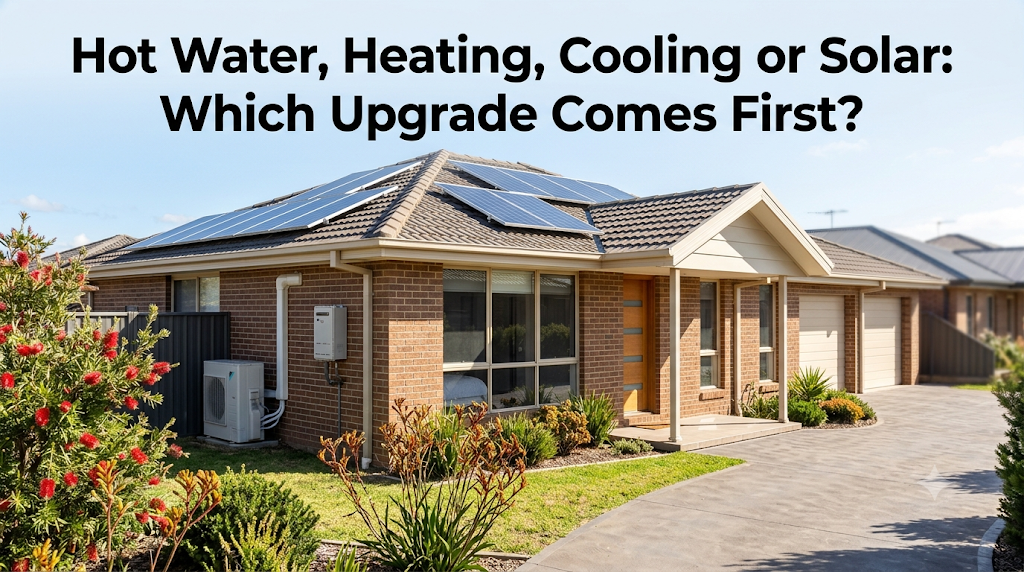
Which energy upgrade should come first?
The first energy upgrade should usually be the one that solves the biggest current problem in your property. If your hot water system is old or unreliable, start there. If heating and cooling are your biggest comfort issue, review air conditioning upgrades. If your daytime electricity use is high, solar may be worth considering. If you already have solar and use more power at night, a battery may be the next step. Eligibility and suitability should always be checked before deciding.
1. Start with the system causing the most pressure
Before comparing products, look at what is causing the most practical problem.
Ask yourself:
Is the hot water system old, unreliable or expensive to run?
Is the home too hot in summer or too cold in winter?
Are old air conditioners struggling?
Is electricity use high during the day?
Do you already have solar but export much of the energy?
Are bills rising because of appliances, tariffs or usage habits?
Is a business site using hot water, heating or cooling for long operating hours?
The best upgrade is not always the most popular one. It is the one that matches your biggest need.
2. When hot water should come first
Hot water can be a strong first upgrade if your current system is old, inefficient, unreliable or close to failure. This is especially important for families, rental properties and businesses that depend on steady hot water every day.
A heat pump hot water system may be worth reviewing if:
your electric or gas hot water system is ageing
the system struggles to meet household demand
repairs are becoming more frequent
you want a more energy-efficient hot water option
your business uses hot water heavily
you want to check state-based upgrade eligibility
For homes and businesses, Auzbright can help review heat pump hot water options and check whether any relevant eligibility pathway may apply.
3. When heating and cooling should come first
Heating and cooling should move higher on the list if comfort is the main issue. This may apply if your old air conditioner is noisy, unreliable, slow to heat or cool, or no longer suitable for the space.
Air conditioning upgrades may be worth reviewing when:
the home is uncomfortable in summer or winter
one room needs targeted heating and cooling
an old unit is becoming expensive to operate
you want to compare split system and ducted options
a workplace needs better comfort for staff or customers
the system no longer suits how the property is used
The right choice depends on room size, layout, insulation, usage patterns and installation conditions. In Victoria, eligibility may also need to be checked under the relevant state pathway before relying on any upgrade claim.
4. When solar should come first
Solar may be a strong first upgrade if your property uses a lot of electricity during the day. This can include homes where people work from home, households with daytime appliance use, or businesses that operate during daylight hours.
Solar may be worth considering if:
your roof has suitable space and sun exposure
daytime electricity use is high
your bills show steady grid usage
you plan to add efficient electric appliances later
your business operates during daylight hours
you want a long-term energy plan
Solar should be assessed properly before installation. Roof condition, shading, switchboard suitability, system size and household or business usage all matter.
5. When battery storage should come after solar
A battery is often considered after solar, but it should not be added automatically. It may make more sense when you already have solar and want to use more stored energy later in the day or evening.
Battery storage may be worth reviewing if:
you already have solar panels
you export a lot of solar energy during the day
evening electricity use is high
you want to explore backup options
your system is battery-ready
the quote clearly explains what backup does and does not cover
A battery does not automatically provide whole-home backup during an outage. Backup depends on the battery, inverter, wiring and system design. Auzbright can help homeowners compare solar and battery options without relying on generic promises.
6. Quick priority guide
Your Main Situation
Upgrade to Review First
Old or unreliable hot water system
Heat pump hot water
Poor comfort in summer or winter
Air conditioning upgrade
High daytime electricity use
Solar panels
Existing solar but high evening use
Battery storage
Business with heavy hot water demand
Commercial heat pump hot water
Unsure what applies in your state
Eligibility check
Multiple ageing systems
Prioritised upgrade plan
This guide is a starting point only. Property conditions, budget, usage and eligibility can change the final recommendation.
7. Do not let rebates decide everything
Government-supported upgrade pathways can be helpful, but they should not be the only reason to choose an upgrade. A discount does not automatically mean the product is right for your home or business.
Victoria and NSW also need to be treated separately. Victorian properties may need to check Victorian Energy Upgrades requirements where relevant. NSW properties may need to check the Energy Savings Scheme or other NSW pathways where applicable. Other states may have different rules or no equivalent support for a particular upgrade.
Auzbright can help you check the correct pathway before you make decisions based on rebate or discount claims.
8. Build a practical upgrade order
If you are not sure where to start, use a simple order:
- Fix failing or unreliable systems first.
- Improve the systems you use most often.
- Check eligibility before assuming support applies.
- Match the upgrade to your property and usage.
- Plan solar and battery around actual electricity patterns.
- Compare quotes carefully before approving work.
This keeps the decision practical instead of chasing the latest trend.
FAQs
Start with the system causing the biggest issue. If hot water is unreliable, review heat pump hot water. If comfort is poor, review air conditioning. If daytime electricity use is high, solar may be worth considering.
Not always. Solar may suit homes with strong daytime electricity use, but an old hot water system or poor heating and cooling may need attention first. The right order depends on usage and property needs.
Usually, battery storage is considered with or after solar. A battery needs a source of stored energy to be useful, and backup capability depends on system design.
Energy-efficient upgrades may help reduce energy use, but savings vary. Usage, tariffs, system type, installation, weather, household needs and business operations all affect the outcome.
Yes. Auzbright can help households and businesses review hot water, air conditioning, solar, battery and eligibility options before choosing the next upgrade.