


Solar and Battery for Australian Homes: Questions to Ask Before You Invest
Solar and battery systems can be a smart part of a long-term energy plan, but they should not be chosen only because they sound popular. For Australian homeowners, the right setup depends on household energy use, roof conditions, daytime power needs, battery goals, budget, electricity tariffs and future plans.
A solar panel system can help generate electricity during the day. A battery can store some of that energy for later use, depending on the system design and household needs. But not every home needs the same system, and not every battery will deliver the same result.
If you are planning solar or battery upgrades, Auzbright can help you compare options and understand how they may fit your home or business energy needs.
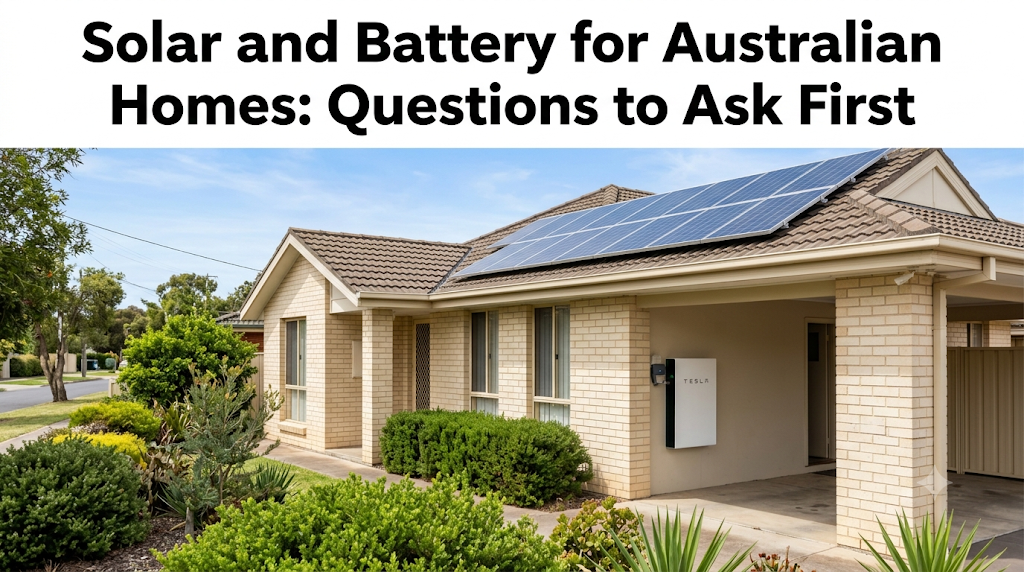
Direct Answer: What should homeowners ask before investing in solar and battery?
Before investing in solar and battery for an Australian home, homeowners should ask how much electricity they use, when they use it, whether their roof is suitable, whether they need a battery now or later, whether backup power is required, what the quote includes, what products are being recommended, and whether any support or eligibility requirements apply. Savings, payback and battery value can vary, so a proper assessment is important.
1. How much electricity does your home actually use?
The first question is not “How many panels should I buy?” It is “How does my household use electricity?”
A family with high daytime usage may have different needs from a household that uses most power in the evening. A home with air conditioning, pool pumps, electric cooking, heat pump hot water or an electric vehicle may also need a different plan from a low-usage household.
Before requesting a quote, review:
your recent electricity bills
daily and seasonal usage patterns
peak usage times
whether most power is used during the day or evening
future appliance plans
whether your household may use more electricity later
This helps avoid oversizing, undersizing or choosing a system that does not match your real needs.
2. Is your roof suitable for solar panels?
A solar system depends heavily on the roof. Direction, shading, pitch, available space and roof condition can all affect the recommendation.
Homeowners should check:
Roof Factor
Why It Matters
Available space
Determines how many panels may fit practically
Shading
Trees, nearby buildings or roof features can affect generation
Roof condition
Older roofs may need attention before installation
Orientation
Panel placement can affect performance through the day
Switchboard and wiring
Electrical suitability should be reviewed before installation
Auzbright can help homeowners understand whether their property is suitable before deciding on a system.
3. Do you need a battery now, or should you plan for one later?
A battery can be useful for storing solar energy for later use, but it does not make sense for every home in the same way. Some households may benefit from installing solar first and reviewing battery options later. Others may want solar and battery together from the start.
Ask yourself:
Do I use most electricity at night?
Do I want to use more of my solar energy myself?
Am I concerned about power outages?
Do I plan to add an electric vehicle later?
Is my current solar system battery-ready?
Does the battery size match my household usage?
The answer should be based on your energy pattern, not a generic recommendation.
4. Do you expect backup power?
Many homeowners assume every battery automatically provides backup during an outage. This is not always true. Backup power depends on the battery, inverter, wiring, switchboard setup and how the system is designed.
Before investing, ask:
Does this battery provide backup?
Does backup cover the whole home or selected circuits?
What appliances can run during an outage?
How long might backup last under normal use?
Is extra equipment needed?
Is backup included in the quote?
This is important because a battery chosen for energy storage may not automatically meet backup expectations.
5. What does the quote include?
Solar and battery quotes can vary. A cheaper quote may not include the same scope, product quality, installation details or support as another quote.
A clear quote should explain:
solar panel system size
inverter type
battery size if included
installation scope
roof and electrical requirements
monitoring setup
warranties as provided by the manufacturer or installer
any exclusions
estimated savings assumptions
eligibility or incentive details where applicable
Do not rely only on a headline price or generic payback claim. A quote should explain the assumptions behind the recommendation.
6. Are incentives or support available?
Some Australian homeowners may be able to access support for eligible solar or battery systems, depending on current federal, state or territory programs. Eligibility can vary by location, product, installer, system requirements and application rules.
This is one of the areas where homeowners should be careful. Do not assume that every home qualifies or that the same offer applies everywhere in Australia. Programs can change, and requirements should be checked before making a decision.
Auzbright can help you understand what questions to ask and whether any available support may apply to your situation.
7. How will solar and battery fit with other upgrades?
Solar and battery planning should not be isolated from the rest of the home. If you are also considering heat pump hot water, air conditioning upgrades, electric appliances or an electric vehicle, your future energy needs may change.
For example, a household planning to use more electricity during the day may approach solar differently from a household that needs more evening storage. A home with efficient appliances may also need a different system size from a home with older high-use systems.
Auzbright supports homes and businesses with solar, batteries, heat pump hot water, air conditioning and other energy-efficient upgrade options, so the advice can consider the broader picture.
8. What should you ask before approving the installation?
Before approving a solar and battery system, ask:
- Is my roof suitable?
- What system size is being recommended and why?
- Should I install battery storage now or later?
- Will the battery provide backup power?
- What assumptions are used for savings estimates?
- What products are included?
- What is included and excluded in the quote?
- Are there eligibility requirements I should understand?
- Who handles installation and support?
- How will the system be monitored after installation?
Good answers to these questions can help you make a more confident decision.