


Heat Pump Hot Water in Victoria: What Homeowners Should Check Before Upgrading
If your current hot water system is old, expensive to run, unreliable, or close to the end of its life, a heat pump hot water system may be worth considering. For many Victorian households, hot water is one of the everyday systems that quietly affects comfort, energy use and running costs.
A heat pump hot water system works differently from a traditional electric or gas hot water unit. Instead of directly generating heat in the same way, it uses heat from the surrounding air to help warm the water. This can make it a more energy-efficient option for suitable homes.
If your current hot water system is expensive to run or nearing the end of its life, Auzbright can help you check your eligibility and explore energy-efficient heat pump hot water upgrade options in Victoria.

Direct Answer: What should Victorian homeowners check before upgrading?
Before upgrading to heat pump hot water in Victoria, homeowners should check their current system type, household hot water usage, available installation space, property suitability, product eligibility, program requirements and quote details. Eligibility and upgrade options can vary, so it is important to speak with an experienced provider before making a decision.
1. Start with your current hot water system
The first step is understanding what you already have. Many Victorian homes still use older electric or gas hot water systems. Some may still work, but they can become less suitable over time if they are inefficient, slow to recover, noisy, leaking, or no longer meeting household demand.
You should check:
Is the system electric, gas, solar boosted or another type?
How old is the system?
Is it still reliable?
Does it provide enough hot water for your household?
Are repairs becoming more frequent?
Is it located indoors, outdoors, in a cupboard, garage or utility area?
These details matter because they can affect replacement options, installation planning and eligibility checks.
2. Understand why heat pump hot water is different
A heat pump hot water system uses surrounding air to help heat water. Because it transfers heat rather than relying only on direct electric resistance, it may use energy more efficiently than some older systems.
For Victorian homeowners, this can be attractive for three main reasons:
Consideration | Why It Matters |
Energy use | Hot water can be a regular part of household energy use. |
Comfort | A reliable system helps support daily routines. |
Upgrade planning | Replacing an old system before it fails can reduce rushed decisions. |
However, a heat pump is not automatically the right option for every home. Suitability depends on the property, household needs, installation location, product choice and program requirements.

3. Check whether your home may be eligible
In Victoria, eligible households may be able to access support for certain energy-efficient upgrades through the Victorian Energy Upgrades program. For hot water upgrades, eligibility can depend on the property, existing system, approved product requirements, installation conditions and current program rules.
This is where homeowners need to be careful. Not every property will have the same outcome, and upgrade offers can change. Avoid relying on general online claims such as “free for everyone” or “guaranteed rebate”. A safer approach is to request an eligibility check before assuming what support may apply.
Auzbright can help Victorian homeowners understand whether a heat pump hot water upgrade may be suitable and what information is needed before moving ahead.
4. Review household hot water demand
A system should match how your household actually uses hot water. A small household may have different needs from a large family. A home with multiple bathrooms, frequent laundry use or high morning and evening hot water demand may need a different setup compared with a low-usage household.
Before requesting a quote, think about:
How many people live in the home?
When is hot water used most?
Are showers often used at the same time?
Do you regularly run hot water for laundry or cleaning?
Is the current system too small or too slow to recover?
These answers can help guide system selection without guessing.
5. Check installation space and location
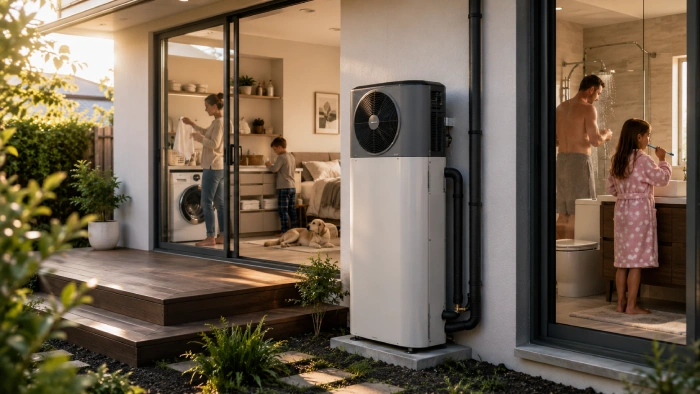
Heat pump hot water systems need suitable placement. The unit may require outdoor space, airflow, safe access, drainage and enough room for installation and maintenance. Some homes are straightforward, while others may need closer review.
Homeowners should not assume that any product can be installed anywhere. Property layout, access, existing plumbing, electrical setup and local installation conditions can all affect the final recommendation.
Auzbright can review these practical details as part of the upgrade discussion so the system is not chosen only on price or rebate claims.
6. Compare more than the upfront cost
It is natural to ask about cost first, but homeowners should also consider long-term suitability. A cheaper option is not always the best fit if it does not suit household usage or installation needs.
When comparing quotes, check:
What product is being offered?
Is it suitable for your household size?
What installation work is included?
Are any extra site works required?
Is the quote clear about what is included and excluded?
Is eligibility being assessed properly?
Is the provider experienced with Victorian upgrade requirements?
Savings can vary based on usage, tariffs, system type, installation quality, weather, and household needs. A fact-safe quote should not promise the same result for every home.

7. Ask the right questions before approving the upgrade
Before you proceed, ask simple but important questions:
Is my home suitable for a heat pump hot water system?
Is my existing system eligible for replacement under current requirements?
What product options are available?
What does the quote include?
Where will the unit be installed?
What preparation is needed before installation?
What should I expect after the system is installed?
These questions help avoid confusion and make the decision clearer.
8. Why work with Auzbright?
Auzbright supports Australian households and businesses with energy-efficient upgrade options, including heat pump hot water systems, air conditioning, solar, batteries and related energy-saving solutions. For Victorian homeowners, Auzbright can help explain upgrade options, check eligibility and guide the next step without making the process overly technical.
The goal is not just to replace a hot water system. It is to choose an upgrade that suits the property, household demand and available support where applicable.
Final CTA
If you are considering heat pump hot water in Victoria, speak with Auzbright to check your eligibility and explore upgrade options for your home. Auzbright can help you understand whether your property may be suitable, what information is needed, and what the next step should be before you make a decision.
FAQs
Not always. Suitability depends on the property, existing hot water system, available space, installation conditions, household hot water needs and current program requirements. It is best to request an assessment before deciding.
Eligible Victorian households may be able to access discounts or support through relevant energy-efficiency upgrade pathways. Eligibility can vary, so homeowners should check their situation with Auzbright before relying on any claim.
A heat pump hot water system may help reduce hot water energy use compared with some older systems, but savings vary. Usage, tariffs, system type, installation, weather and household demand can all affect the result.
If your current system is old, unreliable, inefficient or no longer meeting your household needs, it may be worth reviewing your options before it fails. This can give you more time to compare suitable systems and check eligibility.
Auzbright may need details such as your location, current hot water system type, property type, household requirements and installation conditions. The exact information needed can depend on the upgrade pathway and current requirements.